
Samuel Plimsoll 22 nd July 1875
The Prime Minister told the House of Commons that a brother Member had conducted himself in a manner almost unparalleled, and moved that he be reprimanded where he stood.
The member was Samuel Plimsoll, and in Britain the mark on the side of every ship is named after him.
He was born in Bristol in 1824 and he was not a seaman. He had been a solicitor's clerk and a brewery manager, and in 1853 he went to London to set up as a coal merchant and failed so completely that he was reduced to destitution. He got back on his feet, made money in coal, and was returned to Parliament for Derby in 1868. From the first he devoted himself to one subject, which was the drowning of merchant seamen.
What he had worked out was that the men were not dying by accident. Old ships were being loaded past any sensible point, insured for more than they were worth, and sent out in winter, and if they went down the owner was better off than if they had come home. Plimsoll called them coffin ships. In 1873 he published a book about it called Our Seamen: An Appeal, which set out that nearly a thousand sailors a year were drowning around the coast of Britain, and it made the country pay attention in a way that his bill in Parliament had not.
On 22 July 1875 Disraeli announced that the government's shipping bill would be dropped. Plimsoll rose, and the official record notes in brackets that he was speaking with great excitement. He entreated the Prime Minister not to consign some thousands of living human beings to undeserved and miserable death. He said the Board of Trade had been letting things get worse since 1862 with the help of shipowners of murderous tendencies outside the House who were amply represented inside it.
Then he produced his figures, and they are the part nobody remembers. The Secretary of Lloyd's, he said, had told a friend of his that he did not know of a single ship broken up voluntarily by its owners in thirty years on account of being worn out. On the third of that month Plimsoll had gone through a list of fifteen thousand vessels on Lloyd's Register, and found that 2,654 of the classed ships had fallen out of their class. Every winter, he said, hundreds of brave men were sent to their deaths and their wives made widows, so that a few speculative scoundrels could make unhallowed gains.
He asked whether the registered owner of five named ships, three of them lost the previous year with 87 lives between them, was the sitting Member for Plymouth. The House shouted him down. He said he was determined to unmask the villains. The Speaker asked him whether he meant that word about any member present. Plimsoll said he did, and that he did not mean to withdraw it. He was asked again and declined to retract. He was asked a third time and said no. He was asked a fourth time and said he would not. He laid a paper on the Table and called it his Protest, and Disraeli rose to move the reprimand. As Plimsoll was leaving the chamber he turned round and said, do you know that thousands are dying for this.
The House was told he was ill, and that he had been walked round outside in the open air by a friend to calm him. He was given a week away rather than the reprimand.
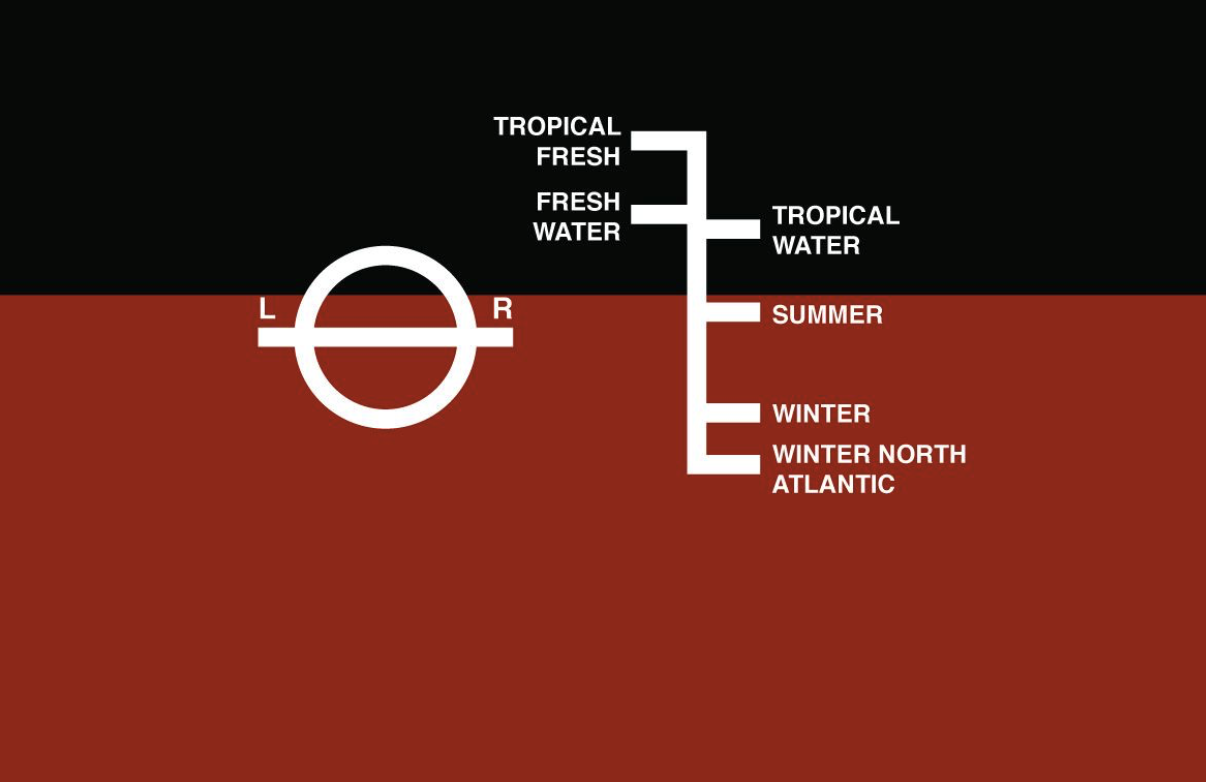
He also won. The country took his side, and the Merchant Shipping Act of 1876 made a load line compulsory on British ships and on foreign ships using British ports.
It was not the victory it looked like. The Act let the shipowner decide where on the hull the line went. Lloyd's Register's own heritage centre puts it drily, that some owners apparently painted them on the funnel. It took until 1890, fourteen years later, before the position of the line was fixed by law rather than by the man who owned the cargo.
His critics were not inventing things either. He was criticised in his own lifetime for the violence of his language, for exaggerating his facts, and for a want of technical knowledge, and a later campaign of his about cattle ships was described as marred by obvious exaggeration. He had never been a sailor, and his opponents said so.
The mark is on the side of every ship in the world.
Source: Underestimated Arsenal