
Strike drone launched from Royal Navy ship for first time
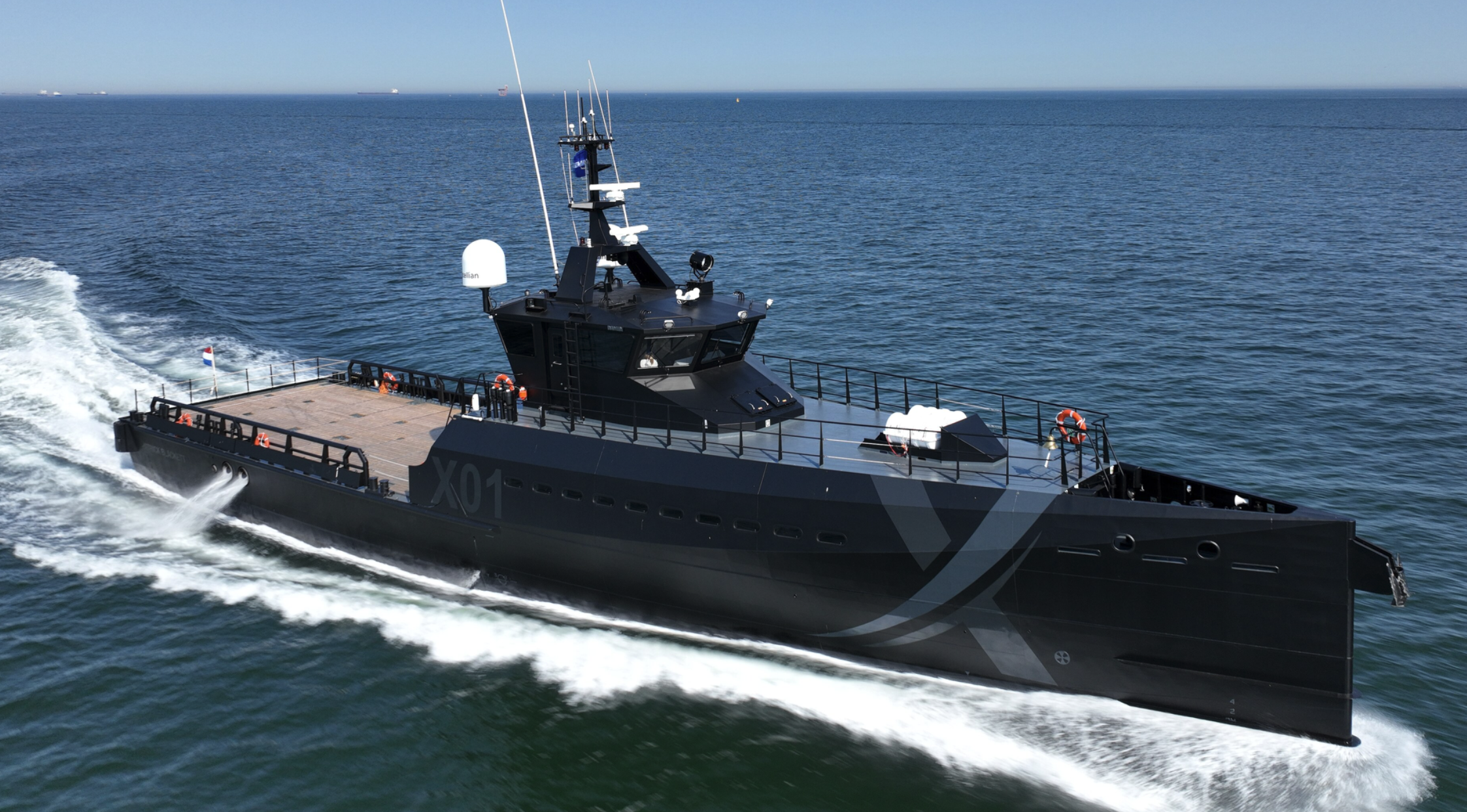
Photo: Royal Navy
The Royal Navy has launched a strike-capable one-way effector drone from a ship at sea for the first time, firing the British-built Nyan from the experimentation vessel XV PATRICK BLACKETT off the south coast of England, the service has announced.
The trials took place last month under Exercise Neptune Reach, with the Royal Navy, British Army and Royal Air Force working together under Project Vantage, a tri-service programme focused on accelerating the test and evaluation of maritime attack drones. Personnel from 26 Regiment Royal Artillery and 744 Naval Air Squadron worked alongside the ship’s company, launching and flying the drone while the vessel was underway. BritishArmy vehicles
The pre-programmed autonomous aircraft was fired from a launcher installed on the ship’s deck, capable of accelerating one-way effectors to up to 55 metres a second.Nyan is a small uncrewed aircraft with a 2.9-metre wingspan designed to provide a precision strike capability, developed and built by Callen-Lenz, a BAE Systems company. One-way effectors of this type are flown to a target and expended on it, trading the performance of conventional cruise missiles for low cost and high production volume.
According to the manufacturer, more than 1,000 units have been produced and the system is already operationally proven on land. The British Army used the same drone and launcher combination in Estonia in May during Exercise Spring Storm, employing it as part of the UK’s deep fires contribution in support of NATO allies.
Minister for Defence Readiness and Industry Luke Pollard said the trials showed the direction of travel for the fleet. “Britain is serious about the transition to a Hybrid Navy with new, powerful drones at the heart of the Royal Navy,” he said. “By bringing together Army and Navy expertise to field strike drones from a ship at sea, we are accelerating the capabilities our forces need to stay ahead of our adversaries.”
Lieutenant Commander David Burton, the Royal Navy’s Maritime One-Way Effectors capability sponsor, said the trial marked “a significant step forward in delivering Maritime One-Way Effectors at pace.” He added: “Under Project Vantage we are planning to integrate these capabilities into the Hybrid Navy, combining crewed platforms with uncrewed systems to expand reach, increase tempo and enhance lethality. Working closely with our army colleagues, this activity demonstrates how we are accelerating Atlantic Strike concepts into practical, deployable capabilities of the Fleet.”
DefenseIndustry Matt Foster, chief executive of Callen-Lenz, said: “These trials reflect strong collaboration across the services and industry, highlighting the pace at which we can deliver innovation to advance the UK’s integrated, multi-domain defence capability.”
The Royal Navy Capability team and the Air and Space Warfare Centre are now analysing the results, with the potential for further trials aboard the aircraft carrier HMS QUEEN ELIZABETH .
The work sits with the drive towards a hybrid fleet backed by the Defence Investment Plan, which commits over £5 billion to drone and autonomous systems according to the Royal Navy, including new classes of uncrewed naval vessels designed to operate alongside crewed warships.
Source : ukdefencejournal George Allison