
Seagoing nuclear power is a huge opportunity
Let's shake off our fear of the atomic voodoo and reap the benefits this technology could bring
Nuclear propulsion at sea has always been an intriguing proposition, promising near-unlimited power and endurance but always offset by irrational fear and vast complexity and costs. In all but a few examples, the latter factors have won out
For the military, its use has been almost exclusively restricted to submarines and supercarriers, where the advantages outweigh the costs - but only just, and not for most. Both classes of warship benefit from the speed and endurance offered by nuclear, but this alone would not be enough.
Nuclear submarines are transformatively different from conventional ones due to not needing air to run their prime movers. Nuclear carriers can embark more aircraft than conventionally powered ones as they do not have to sacrifice deck space for engine exhaust and air intakes. In the commercial sector, nuclear has been restricted almost without exception to icebreakers, where huge power well above that needed to reach maximum hull speed is very useful. Near-unlimited endurance is excellent to have in a ship which could get stuck in the ice until next year.
Again, the sums only just work out, and not for most. In fact, only for Russia.
Of the 220 or so nuclear power plants currently at sea, the majority are in submarines, where the operational advantages are enormous and profit/loss doesn't feature. There are 170 in total across the American, Russian, Chinese, UK, French and Indian navies. Aircraft carriers (where the advantages are decent, but less so than for submarines) account for more than 20 with the US aircraft carrier fleet dominating the numbers.
With all this in mind, it was interesting to note that on Jan 19, the UK Maritime Nuclear Consortium was launched, led by Lloyd's Register, to pioneer commercially viable nuclear-powered ships. Backed by heavyweights like Babcock and Rolls-Royce, who between them have experience with seagoing reactors, the consortium aims to lead on certifications, security frameworks and insurability pathways to position the UK as a leader in this emerging industry.
This is good news, but if change is coming, major hurdles loom, even if developing technology and large production numbers reduce costs to an acceptable amount.
The most obvious is the nuclear fear factor: the "voodoo". The fear of nuclear is certainly alive and well, despite all safety statistics saying the opposite, especially when compared to the risk of extracting and operating oil and gas. Some cite ammonia as the future fuel of choice for shipping. Have a look at that if you want to know what dangerous and nasty looks like.
US naval reactors have steamed more than 177 million miles with over 7,500 reactor-years without incident, and there have been no nuclear accidents in Royal Navy or French fleets. It's safe: end of discussion.
Although the announcement zoomed in on achieving net zero, I don't think this is sufficient on its own. Shipping accounts for just 2-3 per cent of global emissions. By all means, drive it down to zero, but that alone isn't enough of a lever for change of this magnitude. Besides, shipping emits 10 grams of CO2 per ton moved over a mile while road transport is at 62 and air at 602. Shipping is a rounding error in the grand scheme of things. Some shipping firms have pledged to reach zero by 2050, but they aren't spending the money to progress the research. However, with the relationship between speed and profitability and how fast nuclear ships could travel, you would think they would put their considerable weight behind this at some point.
Enter Core Power, who have taken a leading role in founding the Nuclear Energy Maritime Organisation or Nemo in April 2024 to support all this. Core Power sees the production of nuclear power barges for coastal energy generation as a second important string to the maritime nuclear bow.
Beyond shipping, nuclear power offers other options. For power generation, offshore plants are gaining in popularity.
At Davos, discussions highlighted floating barges for remote grids; China plans 20 such reactors for South China Sea islands, powering military outposts and desalination.
Desalination is now huge: as the UN University notes,"global water bankruptcy" threatens billions, with energy-intensive plants needing stable power; nuclear fits perfectly for data centres or coastal hubs too.
This is an exciting development which, if we get it right, will give the UK a lead in shipping, offshore energy and military applications. We have been painfully slow to develop this option on land due to crushing regulations and short-termism; let's not do that at sea. Instead, let's shake off our fear of the nuclear voodoo and set up a cross-Whitehall Taskforce with the authority to cut through the many layers, ministries and quangos that will otherwise stifle progress.
Once upon a time we led the world when it came to innovating at sea: wouldn't it be nice if, just for once, we got some of that mojo back. The shipping, energy, security, economic, trade and influence benefits would be immense.
Source: telegraph.co.uk. Author Tom Sharpe.
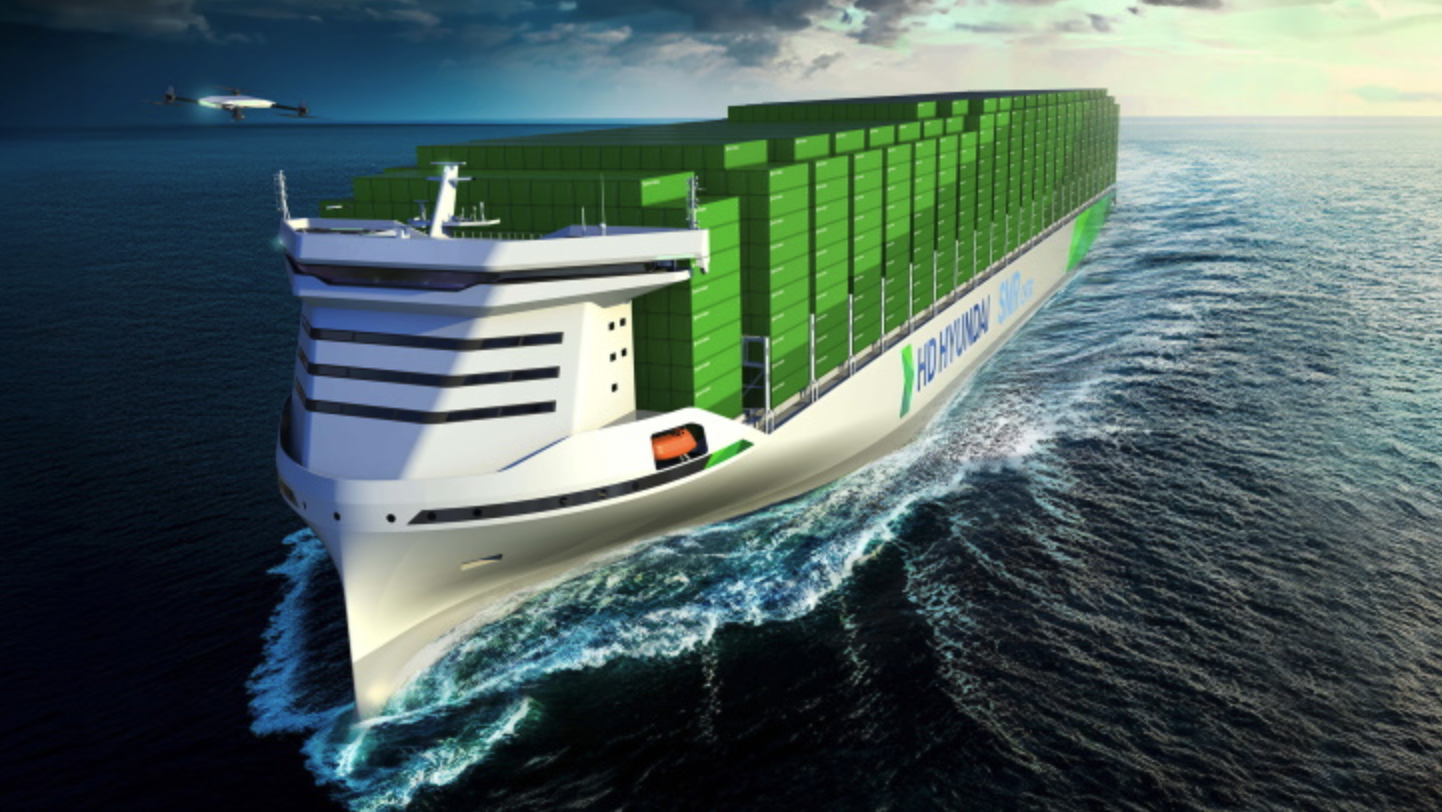
A rendering of a 15,000 TEU-class SMR-powered containership (Image: HD KSOE)