
EyeSea scales from crew reporting to always-on camera monitoring for marine pollution detection
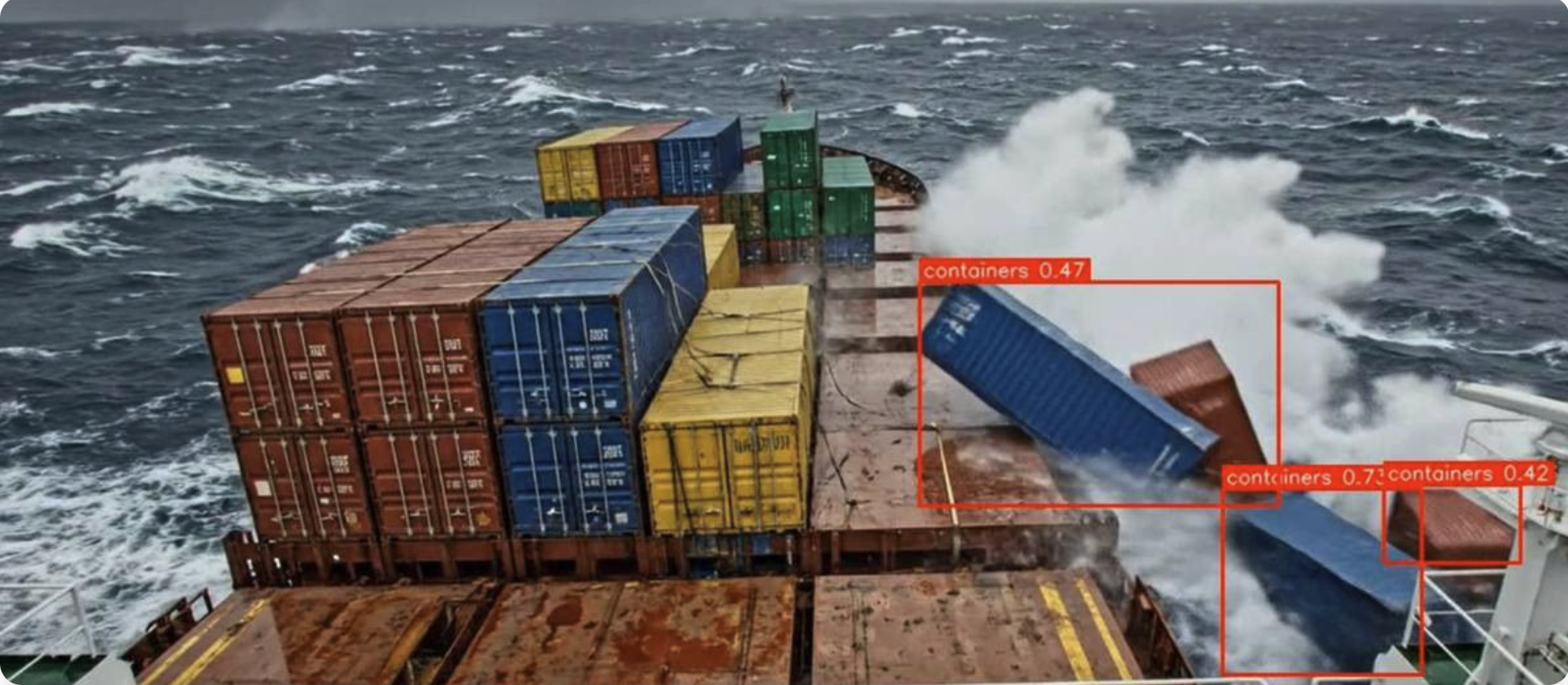
EyeSea is expanding marine pollution reporting from crew-led smartphone submissions to 24/7 camera-enabled detection. The shift aims to boost reporting volume, protect anonymity, reduce crew burden, and deliver more actionable data to ports and operators.
EyeSea is expanding its approach to marine pollution reporting, moving from low-friction, crew-led smartphone submissions toward 24/7 camera-enabled monitoring that can detect pollution without requiring human intervention. The aim, according to EyeSea’s Marius Suteu, is to increase reporting volume and usability while reducing administrative burden and mitigating seafarers’ concerns about personal exposure when documenting incidents.
Anonymised reporting to remove “self-incrimination” concerns
A key barrier to reporting, Suteu said, is the reluctance of crews to capture evidence if they believe it could be traced back to them. EyeSea’s reporting model anonymises user data so that submissions cannot be linked to individual identities in a way that would deter participation. While EyeSea can track aggregated activity levels (such as how many reports a user submits), it does not track reports in a manner that enables tracing specific incidents back to a named person.
Suteu added that improved reporting is foundational for any downstream action: without documented observations, ports, operators, and communities have limited triggers to respond.
From “you have to see it” to 24/7 camera detection
EyeSea’s original model relied on crew members observing pollution directly, then using a phone to capture and submit an image. The limitation is obvious: if nobody sees it at the right moment, nothing gets reported. EyeSea is now enabling continuous monitoring by using camera feeds as an always-on “sensor” — on the bridge, on deck, or within port environments — to detect incidents without requiring crews to stop tasks or increase watchkeeping workload.
Suteu said the shift should also support fatigue reduction by removing the need for crew to continuously scan for reportable events.AI to enrich reports with volume and type estimates
EyeSea is also developing a processing layer to convert images into more structured information. Suteu described how the platform captures GPS position, timestamp and imagery, then applies AI to augment what the photo shows — including estimates of volume and identifying the type of pollution, such as plastics — with the objective of keeping user input minimal while improving the value of the dataset.
APIs and integration into operator workflows
Rather than positioning EyeSea as a formal compliance product, Suteu framed the platform as an enabling layer that organisations can incorporate into their own systems. EyeSea’s primary integration pathway is via APIs, allowing companies to access and embed the data where there is a meaningful use case and broader benefit. He added that the platform’s camera-based detections are designed to trigger events in EyeSea’s system — a structure that could support incident-workflow routing if operators want to act quickly.
Port and terminal interest driven by actionability
EyeSea has also been working with ports and terminals seeking more practical reporting tools — particularly where manual reporting remains vague or slow. Suteu cited collaborations with ports and terminals in the US dating back roughly 18 months to two years, where the ability to “drop a pin” on a map helps port authorities identify exact locations and respond more effectively.
Built for constrained connectivity and restrictive IT environments
For container shipping, intermittent connectivity and air-gapped constraints remain a deployment reality. Suteu said EyeSea’s app is designed to work offline, storing reports locally — including core data such as timestamp, geolocation and image — and synchronising only when a suitable connection becomes available. The delay can be days or longer without undermining the integrity of the recorded observation. He also noted that the platform has previously reached significant scale in registrations, citing a period when more than 4,000 ships were registered, which helped inform deployment and integration practices with fleet IT teams.
Remaining an NGO
Despite the potential commercial value of aggregated pollution intelligence, Suteu said EyeSea intends to remain an NGO. He stated that the organisation has been operating as a non-profit for more than five years and that its member backing supports maintaining a mission-led structure rather than moving to a commercial model.
Source: seanews.co.uk. Shahjahan Ahmed