
CATL predicts oceangoing electric cargo ships will enter service within three years
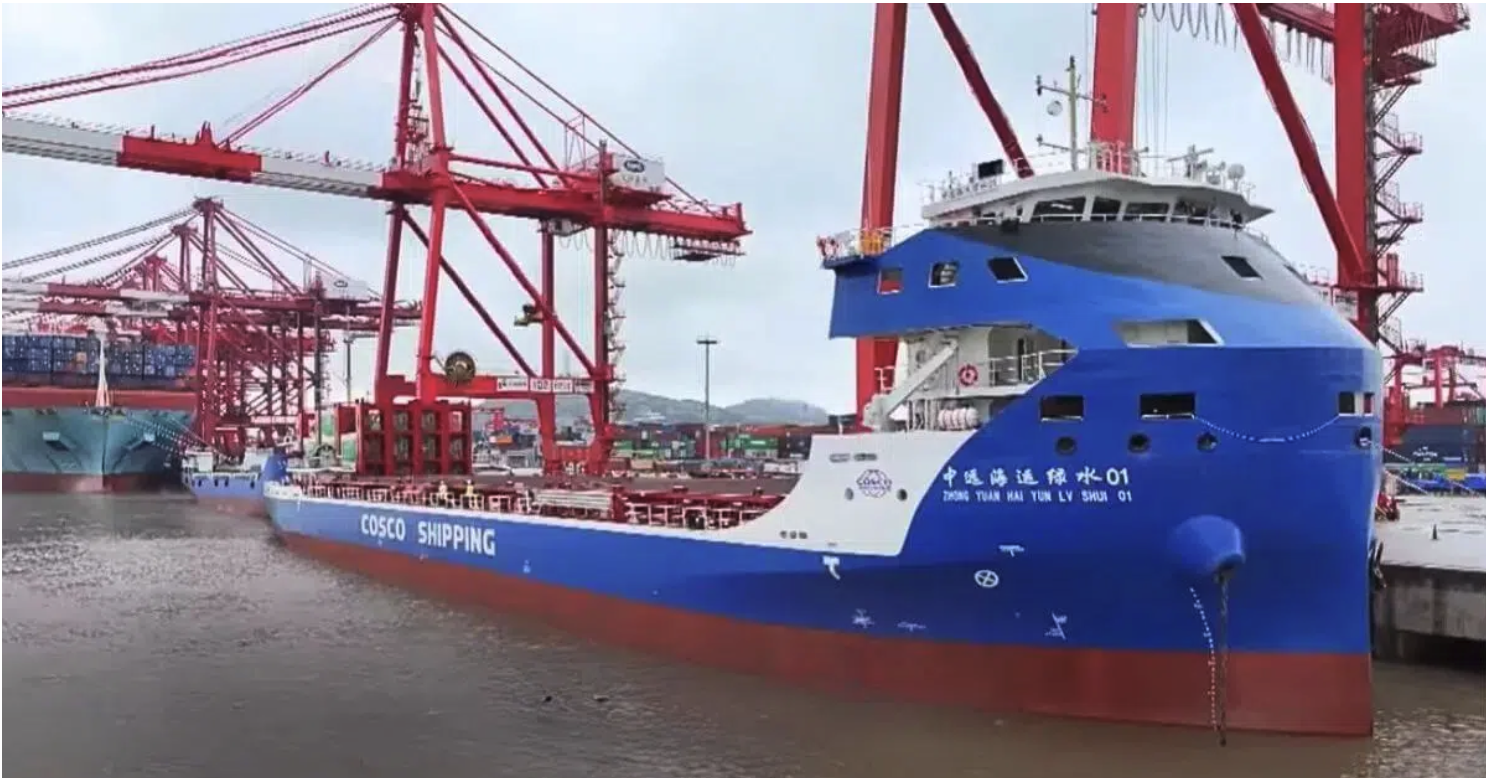
Screengrab from YouTube video posted by CCTV Video News Agency
CATL shipbuilding general manager Su Yiyi believes shipping decarbonization is a “certain trillion-dollar industry”
Chinese battery and technology manufacturer CATL is looking to expand its operations to serve electric transoceanic vessels within three years.
Many see the electrification of heavy-duty cargo ships as too difficult a challenge to overcome. Yet the shipping industry accounts for roughly 3 percent of global emissions.
At Marintec in Shanghai, China, last week, the head of the company’s marine division predicted that transoceanic electric vessels will be plying the seas within three years.
Shipping decarbonization is a ‘trillion-dollar industry’
CATL is the world’s leading producer of lithium-ion batteries. Its cells are found in roughly 40 percent of the world’s electric cars. Its marine business notably provided the powerpack for the large river cruise ship Yangtze River Three Gorges 1. That vessel required more than 10,000 battery cells. At the time of its construction, it had more energy storage than any other vessel.
According to a report from The Maritime Executive, it also recently announced plans to expand into new markets. The battery giant will build a network of shore-charging systems, as well as onboard power-management systems.
“Shipping decarbonization is the next certain trillion-dollar industry,” CATL Shipbuilding general manager Su Yiyi told NBD at Marintec, according to the Maritime Executive. “The ship sector will systematically expand CATL’s market boundaries from land to water, and is an important part of CATL’s innovative growth curve.”
Ultimately, the company aims to provide end-to-end electrification with its “ship-shore-cloud” service model. It will provide this service via its batteries, a vast network of charging systems, and cloud-based safety management.
While transoceanic vessels would require long-lasting solutions, inland cargo vessels can use its containerized powerpack system. This is easily swappable, meaning operators can avoid lengthy charging times.
Electrifying sea transportation
Electrifying sea transportation poses several key challenges when compared with road transport. Sea vessels must operate in environments with high humidity and salinity. They also have a high power demand and must operate effectively over long voyages.
According to Chinese tech outlet Futu Niu Niu, Zheng Bi, Director of CATL’s Marine Battery Solutions, recently addressed these challenges, stating that a diversified approach is required. For tour boats, for example, pure electric solutions are prioritized.
These enable silent, comfortable, zero-emission transport. For inland river cargo ships, meanwhile, containerized power and battery swapping are a better solution. When it comes to offshore vessels, more powerful solutions are required.
One recent study points out that long-range cargo vessels will likely have to use both electric and oil power systems initially. Typically, cargo ships traveling from Asia to Europe complete the voyage without refueling because of the high energy density of oil.If the firm’s executives are to be believed, it won’t be long before more advanced, lower-weight battery systems make these long journeys possible with battery-electric vessels.
Source : nterestingengineering. Chris Young