
GCMD report finds 7.2% mean savings from wind propulsion on EPS tanker
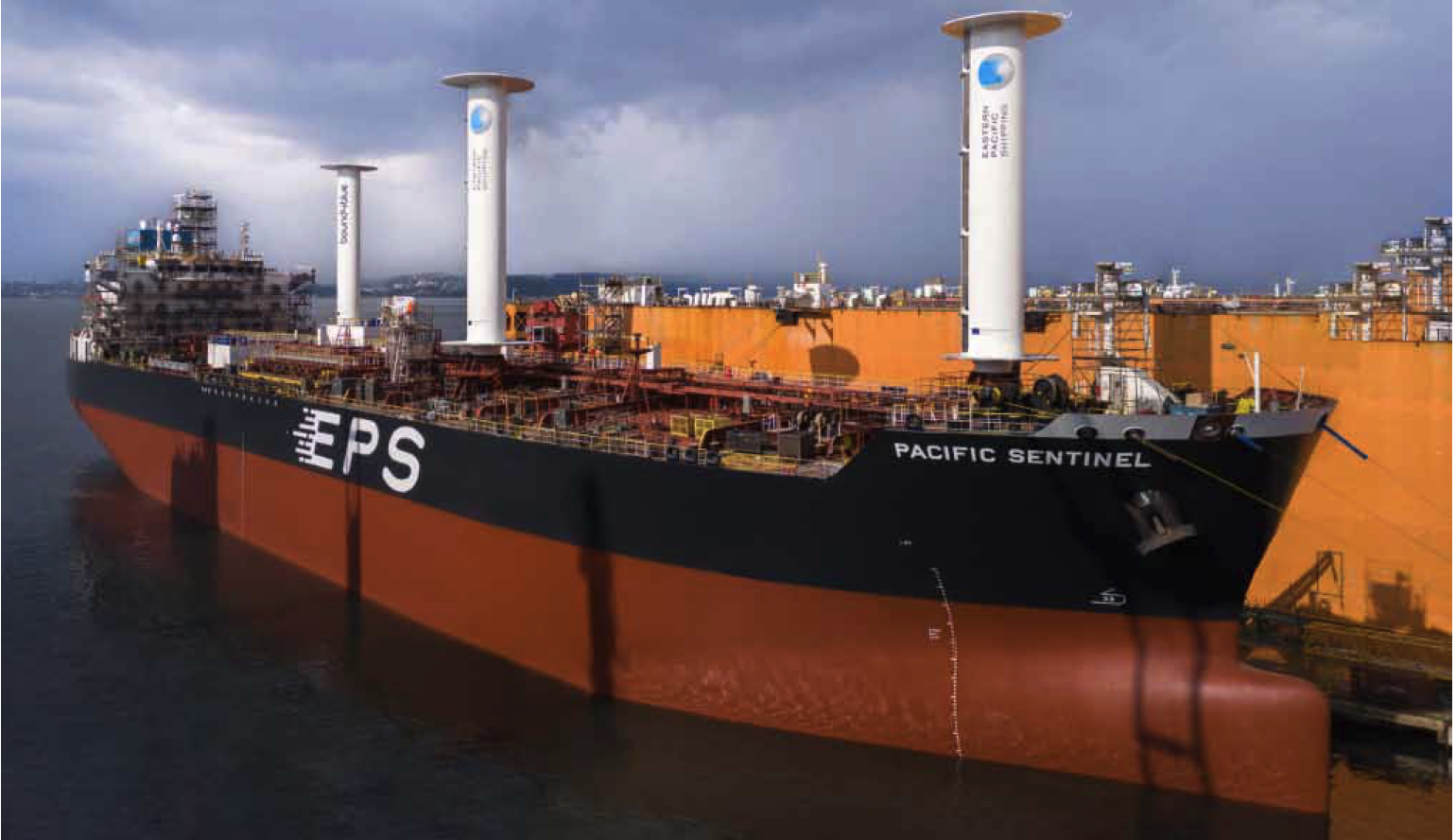
A joint report by the Centre for Maritime Decarbonisation (GCMD) and Singapore-headquartered Eastern Pacific Shipping (EPS) proposes a method to validate the performance of wind propulsion systems in real-life operations, which has measured 7.2% average power savings in a first case study on EPS’ PACIFIC SENTINEL.
The method is based on a high-frequency data collection system that uses sensors to monitor weather conditions and track power consumption, vessel speed and heading every 15 seconds. It applies an on-off testing protocol, in line with ITTC and DNV guidelines and statistical analysis to isolate and quantify energy savings derived from the sails.
The method was used to monitor the performance of three 22-metre suction sails, which were installed on the 50,000 DWT Pacific Sentinel in March 2025, during a four-month period ranging from mid-May to mid-September.It found mean instantaneous power savings of 7.2%, with a 95% confidence interval between 6.2% and 8.2%.
The vessel was operated on the spot market around the Americas, facing predominantly near-headwind conditions. ‘If the vessel experienced more favourable wind conditions, the savings could be higher,’ the report notes.
The analysis reported peak savings of up to 28.1% under favourable beam winds, and negative savings up to -14%, although both were statistically rare.
GCMD indicated that, as the method is applied across multiple vessels and operational profiles, it aims to build a larger database to enable modelling and fuel savings predictions for diverse operating conditions.
‘Establishing a credible, standardised framework for WAPS measurement and verification is a critical step toward scaling wind-assisted propulsion across the global fleet, turning empirical results into actionable confidence for shipowners, financiers, and regulators alike,’ the report states.
The Singapore-headquartered non-profit said the ability to quantify and verify savings would support pay-as-you-save repayment mechanisms, including its Fund for Energy Efficiency Technologies (FEET), which was launched last month.
Source : Ship energy Ariane Morrisey