
NZ Government declines permit for Swiss-based cement carrier
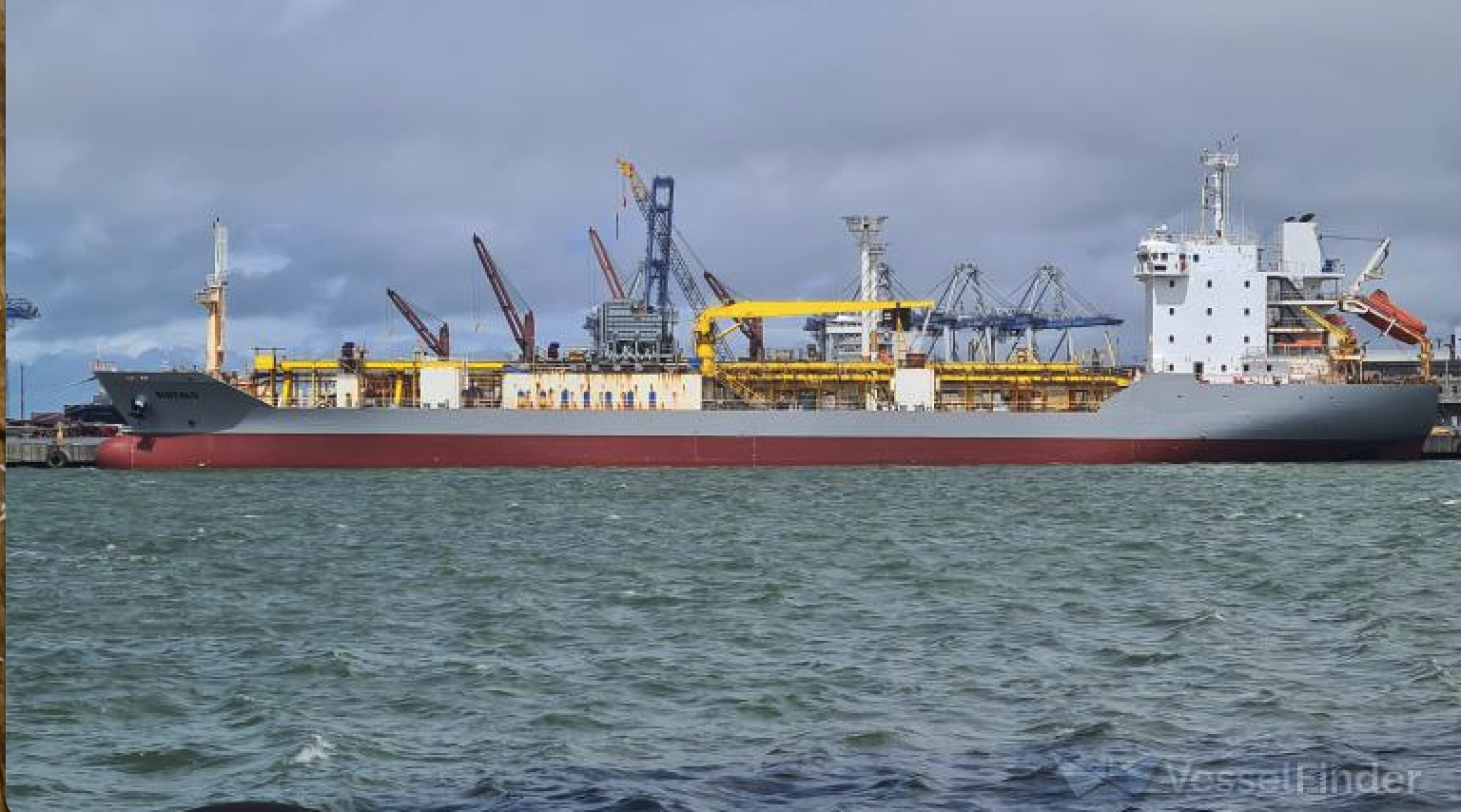
Photo: courtesy Vessel Finder
The Government has declined an application lodged by a Swiss-based shipping company to carry cement in New Zealand’s domestic waters.
“After careful consideration, I have declined NovaAlgoma Cement Carriers’ application for authorisation to operate a coastal shipping service in New Zealand waters,” Associate Minister of Transport James Meager said on Tuesday. “Under New Zealand maritime law, coastal cargo can generally only be carried by a New Zealand ship. “Foreign ships may carry coastal cargo under certain situations, including using a demise charter to a New Zealand-based operator under New Zealand laws, or if the carriage is incidental in relation to the carriage of international cargo. “For other uses, an authorisation to carry coastal cargo under section 198(2) of the Maritime Transport Act is required.”
NovaAlgoma Cement Carriers (NACC) sought an exemption to allow it to move cement around the coastline using a foreign-flagged vessel and foreign crew after signing a contract with Holcim to move its product for up to three years
“The intent of section 198 of the act is to protect New Zealand coastal shipping for local commercial interests,” Meager said. “While authorisations can be granted under section 198(2) ... these are typically for single journeys on New Zealand’s coast to meet a short-term need. “In this case, I was not satisfied Nova’s application met the requirements of the act. I informed Nova of my decision last night. “I appreciate there has been a high degree of interest in the outcome of the application. “The public should have confidence that all authorisations to carry coastal cargo align with the intent of section 198 of the act, and that has been my priority throughout this process.”
Late last month, Holcim New Zealand confirmed it had entered into a contract to sell its Kiwi-crewed coastal cement carrier MV Buffalo to NACC at the end of the year and to lay off the 32 seafarers it employed to operate the vessel. At the time, a company spokesperson said the MV Buffalo was “too large, inefficient and costly to run” and needed $8 million worth of repairs in the next four years.
“The decision follows a comprehensive review of Holcim’s shipping requirements and operational costs,” the spokesperson said. “The review identified the need for a more modern, smaller and cost-effective vessel to maintain supply of cement to the South Island and lower North Island.”
The spokesperson also confirmed the company had entered into a contract for NACC to supply “an interim replacement vessel for up to three years” while it investigated building a “modern pneumatic vessel specifically for the local trade”. They said the company had considered a number of short-term and long-term options for shipping, including the evaluation of road transport and shared shipping with other companies.
“If NACC are unable to supply a suitable vessel to Holcim, road transport is our only interim option, and this will result in considerable supply challenges and additional costs delivering cement to the top of the South Island or Lower North Island,” the spokesperson said.
The Maritime Union of New Zealand (MUNZ), which called on the Government to reject the application, welcomed Meager’s decision.
MUNZ national secretary Carl Findlay said it was the right decision and confirmed New Zealand’s law could not be ignored or sidestepped by multinational companies.
“This is a win for local jobs and New Zealand shipping.” Findlay said the union was now calling on Holcim to commit to supporting New Zealand shipping and retaining local jobs. “The highly skilled crew of the MV Buffalo is ready, willing, and able to continue serving New Zealand’s coastal distribution network.” He said he believed Holcim’s claim it would transport cement by road if the permit was not granted was “nonsense and a bluff”.
Holcim has been approached for comment.
Source: thepress.co.nz. Brooke Black.